Product Validation- Senior Assistive Blueprint Design

The journey of aging is defined by a tension between the desire for independence and the complex realities of care, often resulting in fragmented, frustrating experiences for seniors, families, and home care agencies alike. This case study details a strategic UX research and service design initiative to validate and develop the product blueprint for the Senior Buddy tool, an assistive device designed to improve the lives of seniors living at home.

Moving from just an idea, I leveraged mixed-methods research. I led the effort to harmonize the emotional, functional, and market expectations of all stakeholders, transforming a loose product idea into an actionable, user-centred service ecosystem.

Company

Company

Hulpr

Industry

Industry

HealthCare, Senior Living

Role

Role

Lead UX Researcher & Service Design

Lead UX Researcher

& Service Design

Methodologies & Approach

Methodologies & Approach

Mixed-research methods, collaboration, journey map, process flow

Mixed-research methods,

collaboration, journey map,

process flow

Team

Team

Business founders, Ingenuity Lab

Product Team

(Product Manager, Developer,

User Writers & Architecture

Timeline

Timeline

3 months (2022)

Project Objectives

Identify the needs, challenges, and motivations of multiple stakeholders (seniors, families, home care agencies).

  • Define customer journeys and highlight critical touchpoints in the care process.

  • Establish a standardized data collection framework to improve iteration and scalability.

  • Validate concepts for an MVP that balances the emotional, social, and functional needs of seniors

Results

The strategic UX research for the Senior Buddy tool successfully harmonized the emotional and functional needs of seniors, families, and home care agencies. Key outcomes included creating an integrated journey map that served as a 360-degree strategic blueprint, shifting the product focus to experience-driven design with social interaction as the primary driver, and validating core MVP requirements (e.g., a simple, voice-enabled interface).

The project concluded by delivering a comprehensive Proof of Concept Report to guide the engineering team directly into the prototyping and testing phase.

Secondary Research

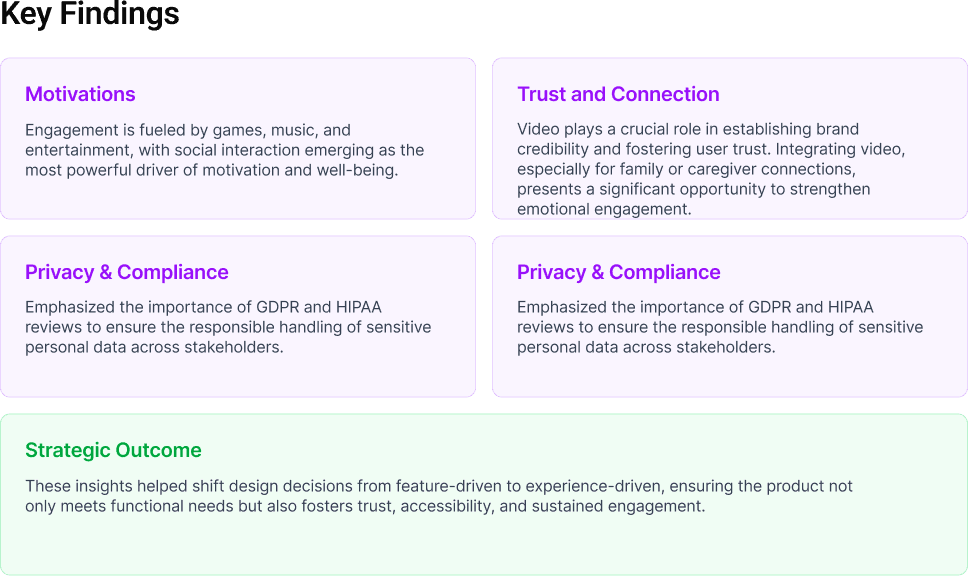
Industry Exploration: To strengthen our understanding of seniors’ needs and align with industry best practices, I conducted secondary research to identify motivators, digital behaviours, and design constraints that would inform the Senior’s Buddy Tool experience strategy.

Secondary Research

Industry Exploration: To strengthen our understanding of seniors’ needs and align with industry best practices, I conducted secondary research to identify motivators, digital behaviours, and design constraints that would inform the Senior’s Buddy Tool experience strategy.

Product Recommendations and Next Steps

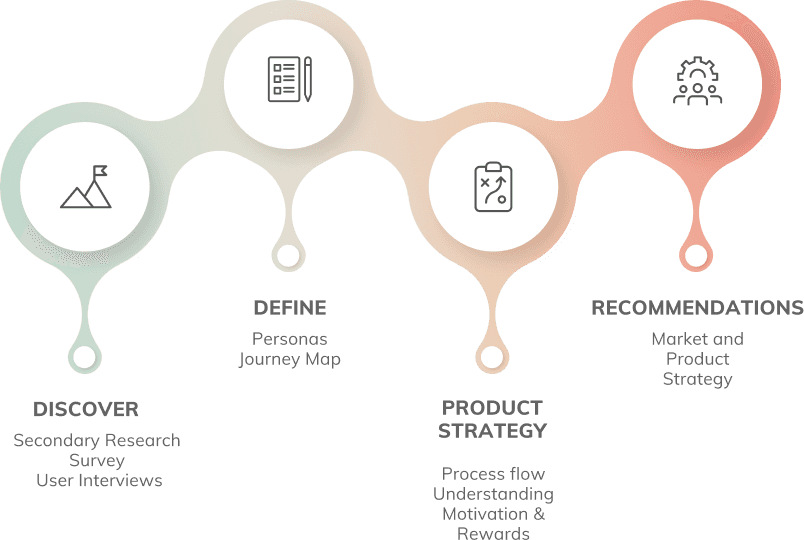
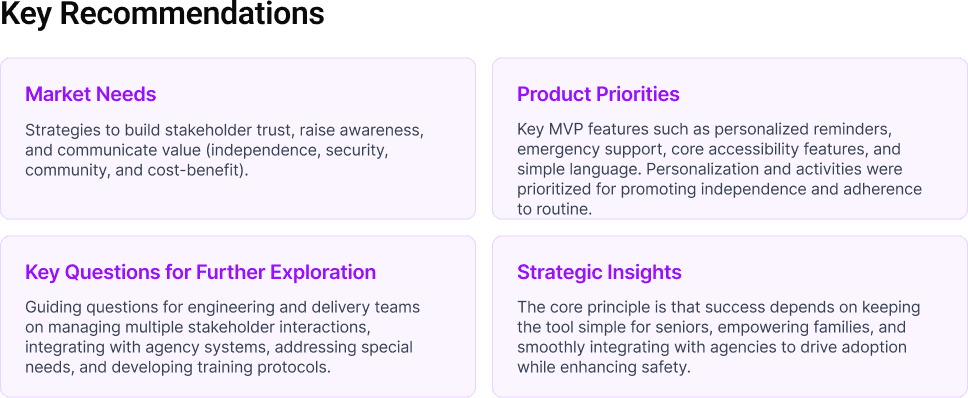
Based on the research, the final Product Recommendations for the Senior Buddy tool were designed to serve seniors, families, and home care agencies by building trust, enhancing independence, and ensuring seamless coordination.

While the final user stories cannot be included as the client's product is a work in progress, the full proof of concept report provided to the client included the following and validated core ideas:

Validated the need for a simple, intuitive, and voice-enabled interface and prioritized product features such as personalized reminders and emergency support due to their impact on promoting independence and adherence to routine.

Motivational Drivers: Identified and defined a design ecosystem for intrinsic motivators (emotional connection, autonomy) and reinforcing rewards (personalized prompts) to sustain long-term senior engagement.

Survey

Survey Insights: To ground the project in real user needs, I designed and conducted an online survey targeting seniors’ families and home care agencies to understand the needs of their needs in relation to seniors. A total of 55 responses was received

Secondary Research

Industry Exploration: To strengthen our understanding of seniors’ needs and align with industry best practices, I conducted secondary research to identify motivators, digital behaviours, and design constraints that would inform the Senior’s Buddy Tool experience strategy.

User Interviews

Integrated Journey Map

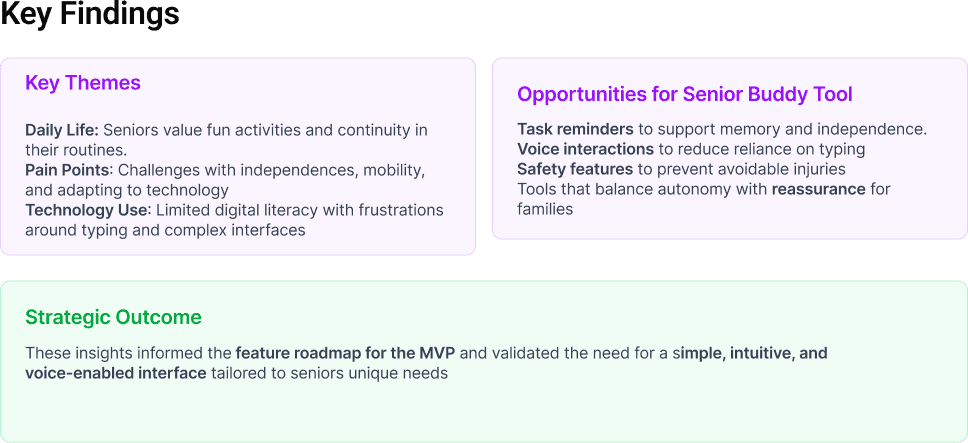
User Interviews: To complement survey findings, I conducted an in-depth interview with a home care agency manager and a senior. This helped validate survey insights, surface gaps in care delivery, and enrich the development of customer journey maps, which were then consolidated into an integrated journey map across seniors, families, and care providers.

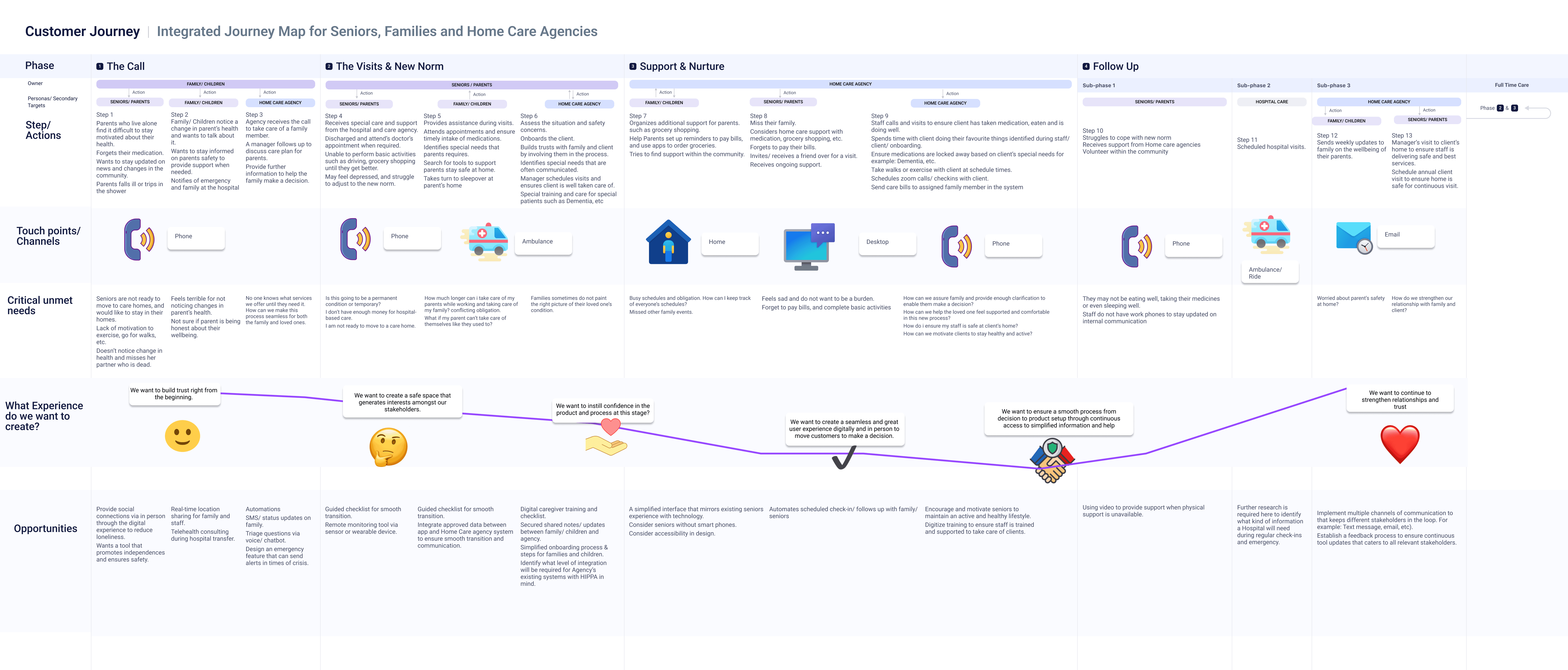
I designed individual customer journey maps for all key personas: Seniors, their families, and home care agencies. To identify critical touchpoints and experience overlaps across the entire service ecosystem, I then consolidated these findings into an integrated journey map. This strategic blueprint provided the founders with a holistic, 360-degree view, directly informing their product strategy and path forward.

User Interviews

User Interviews: To complement survey findings, I conducted an in-depth interview with a home care agency manager and a senior. This helped validate survey insights, surface gaps in care delivery, and enrich the development of customer journey maps, which were then consolidated into an integrated journey map across seniors, families, and care providers.

Integrated Journey Map

I designed individual customer journey maps for all key personas: Seniors, their families, and home care agencies. To identify critical touchpoints and experience overlaps across the entire service ecosystem, I then consolidated these findings into an integrated journey map. This strategic blueprint provided the founders with a holistic, 360-degree view, directly informing their product strategy and path forward.

Integrated Customer Journey Map

Integrated Customer Journey Map

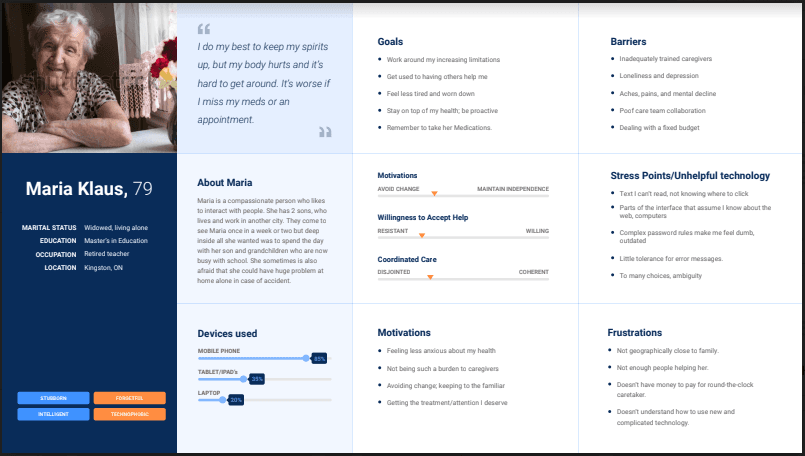
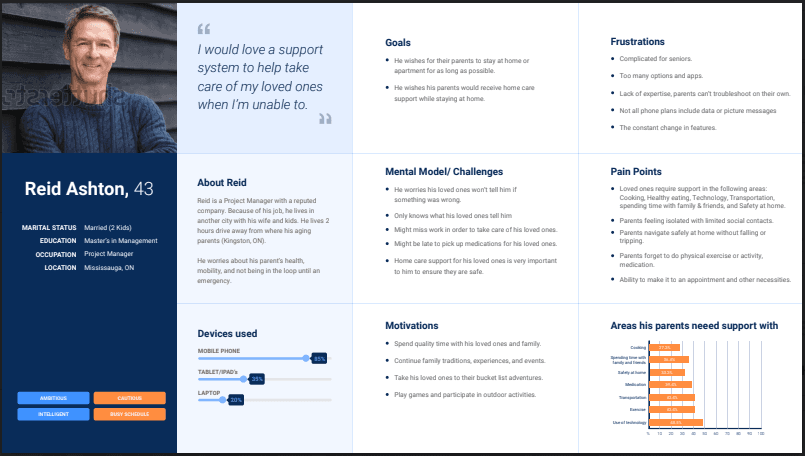
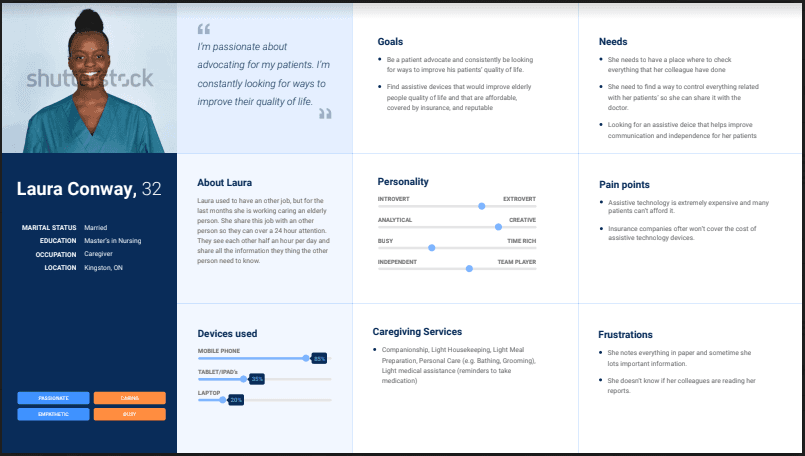
Personas: Seniors, Family of Senior, and Home Care Agency

Product Process Flow

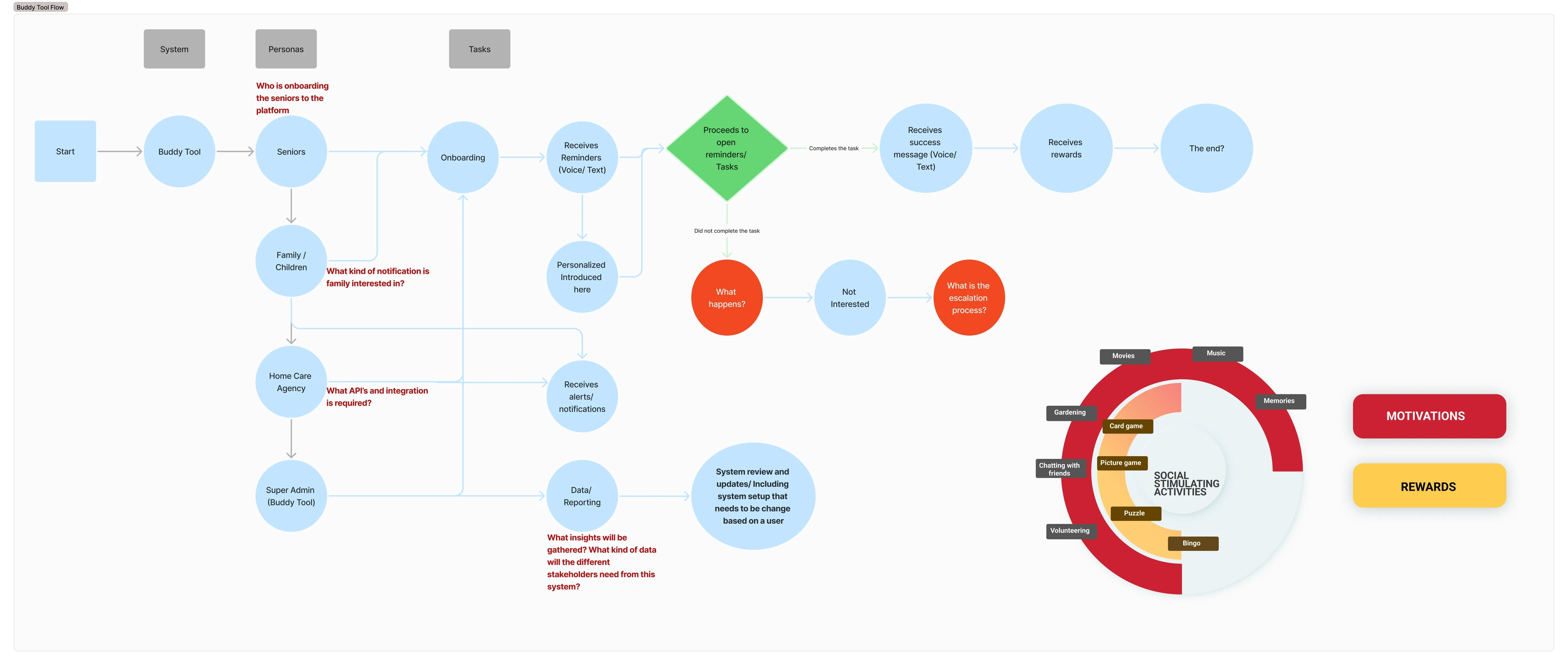
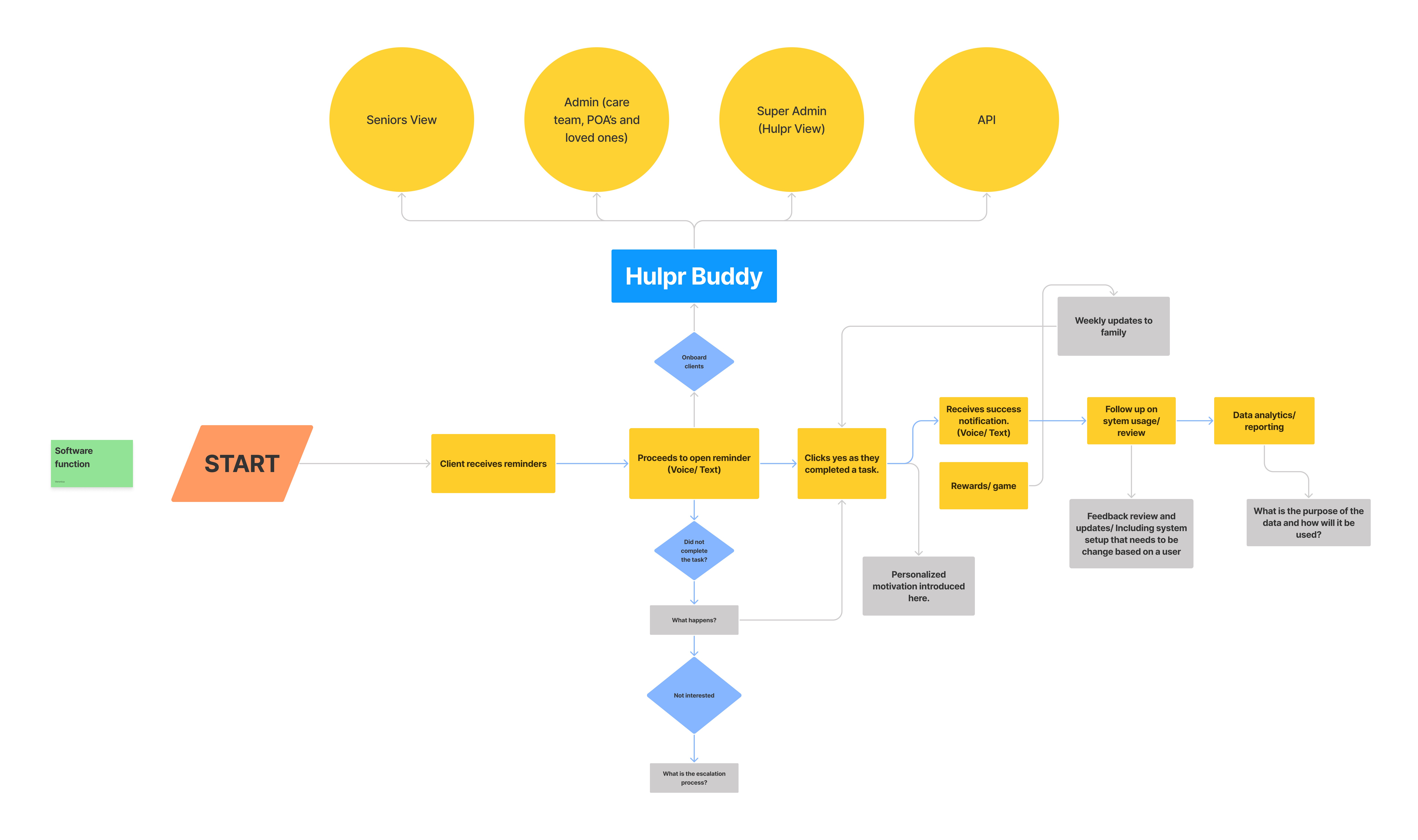
Given the initial uncertainty on a purely hardware or software solution, the research suggested a hybrid approach would deliver the best user experience. I therefore developed a preliminary Product Process Flow—not as a final design, but as a strategic recommendation to initiate technical discussions with the engineering team.

This flow served to clarify the system's potential function, particularly in these areas, and surfaced critical open-ended questions:

  • Flow Overview: The model included an Entry Point (onboarding for seniors, with open questions on family/agency management), Notifications & Reminders (voice/text for seniors, alerts for caregivers), and a Task Completion Path that included success messages/rewards or defined Escalation Processes (e.g., family intervention) for incomplete tasks.

  • Strategic Purpose: It focused on Stakeholder Integration by outlining how families and agencies would interact with the system via reporting and notifications. Crucially, the flow incorporated Motivations & Rewards (socially stimulating activities) to sustain senior engagement and demonstrated the need for Data & Insights to personalize future experiences.

Ultimately, the process flow acted as a strategic conversation starter, surfacing key unknowns around data needs, onboarding ownership, system integration, and escalation protocols to guide the next phase of development.

Product Process Flow

Given the initial uncertainty on a purely hardware or software solution, the research suggested a hybrid approach would deliver the best user experience. I therefore developed a preliminary Product Process Flow—not as a final design, but as a strategic recommendation to initiate technical discussions with the engineering team.

This flow served to clarify the system's potential function, particularly in these areas, and surfaced critical open-ended questions:

  • Flow Overview: The model included an Entry Point (onboarding for seniors, with open questions on family/agency management), Notifications & Reminders (voice/text for seniors, alerts for caregivers), and a Task Completion Path that included success messages/rewards or defined Escalation Processes (e.g., family intervention) for incomplete tasks.

  • Strategic Purpose: It focused on Stakeholder Integration by outlining how families and agencies would interact with the system via reporting and notifications. Crucially, the flow incorporated Motivations & Rewards (socially stimulating activities) to sustain senior engagement and demonstrated the need for Data & Insights to personalize future experiences.

Ultimately, the process flow acted as a strategic conversation starter, surfacing key unknowns around data needs, onboarding ownership, system integration, and escalation protocols to guide the next phase of development.

Process flow

Product Recommendations and Next Steps

Based on the research, the final Product Recommendations for the Senior Buddy tool were designed to serve seniors, families, and home care agencies by building trust, enhancing independence, and ensuring seamless coordination.

While the final user stories cannot be included as the client's product is a work in progress, the full proof of concept report provided to the client included the following and validated core ideas:

Validated the need for a simple, intuitive, and voice-enabled interface and prioritized product features such as personalized reminders and emergency support due to their impact on promoting independence and adherence to routine.

Motivational Drivers: Identified and defined a design ecosystem for intrinsic motivators (emotional connection, autonomy) and reinforcing rewards (personalized prompts) to sustain long-term senior engagement.

Reflection

The care journey for seniors and their families is emotional and complex, hinging on a tension between dependence and autonomy. This duality requires functional solutions and the reassurance of trust and empathy. The research confirmed that access to timely information and emotional monitoring is critical for enabling independence and well-being.

The integrated insights and product flows outlined the foundation for the next phase: prototyping and testing. These steps should be completed in close collaboration with the engineering team to support a smooth transition from research to build while maintaining efficiency, feasibility, and scalability. 

By aligning product design with the lived experiences of seniors, families, and home care agencies, Hülpr is well-positioned to create a solution that not only meets functional needs but also delivers emotional value, ultimately helping people live longer, healthier, and more connected lives.

“ I’ve had the pleasure of working with Veronica on a few projects. She is a very mature and professional team member and brought a significant amount of value to our outcomes. She was polite and efficient and someone I would highly recommend for anyone seeking a driven team member who stays on task and utilizes a variety of tools to achieve positive outcomes. ”

Tim O'Hara

Co-founder & Advisor | Hulpr

“ With our new visual branding and language in place, the new Shopify brand clearly captures the essence of our current and target customer base, our employees, and our values. ”

Tobias Lütke

CEO, Co-founder | Shopify